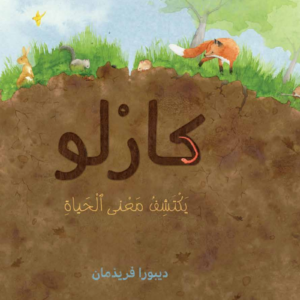
 Carlo and the Meaning of Life
 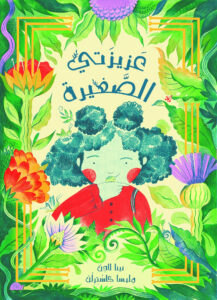 Dear Little One
 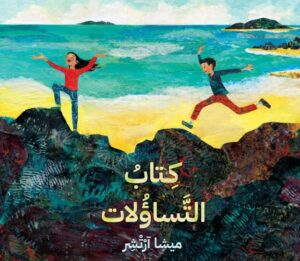 Book of Questions
 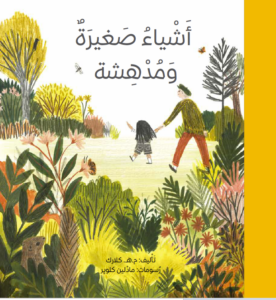 Tiny perfect things
 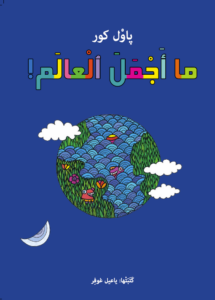 Beauty of the World
 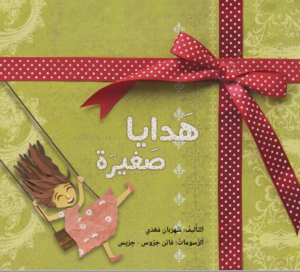 Small Presents


Save
About the book
Dear Parents,
Children often ask big, existential questions that leave us puzzled!
“Why do you do what you do?”
This is the question the field mouse asks Carlo the earthworm, turning his life upside down. Carlo stops his daily work and sets off on a journey to find meaning in his life. Along the way, he discovers that the task he once thought was simple is, in fact, essential for nature and for the living creatures around him. He returns to his mission with pride.
The book highlights the idea that every individual has an important role—even if it seems small or unnoticed—and that the everyday actions we perform can carry great meaning when we understand their impact on others and the environment. Through this story, we can instill in children values such as responsibility, cooperation, belonging, and self-discovery, while opening a gentle conversation about their own big questions in a way that fits their world and way of thinking.
Save
Let’s talk about the role of the earthworm in nature
Let’s Talk
About the role of the earthworm in nature
Follow the illustrations with your child and discuss:
How did Carlo feel when he couldn’t answer the mouse’s question?
What happened to nature when Carlo stopped working?
What did Carlo discover about his role and purpose?
About appreciating others’ work
Ask your child: Do you think Carlo’s work is important? Why?
Imagine what would happen if people stopped doing their ordinary or daily tasks.
About the value of their own actions
Ask your child: What is something you do at home or in class that feels important—even if no one notices?
Is there something simple you do every day that actually helps others?
Such questions encourage children to reflect on their personal impact and help them build self-worth rooted in meaning, not just achievement.
Save
The story uses many question words. Identify them together and use them to practice forming questions.
Let’s Enrich Our Language
The story uses many question words. Identify them together and use them to practice forming questions. Encourage your child’s curiosity by creating questions that begin with why and how, and explore possible answers together.
Save
Learn about the importance of small creatures in nature—like earthworms
Let’s Explore and Create
Learn about the importance of small creatures in nature—like earthworms (or others). Watch pictures or short clips about their lives, and discover how they help maintain natural balance.
Then, use clay, playdough, or cardboard to create your own “Carlo,” and place him in a small “garden” that you design. Make a picture or model representing the soil and plants around him.
As you build, talk with your child about how Carlo’s small actions make the earth fertile and full of life—and connect this idea to their own everyday actions that make a difference, such as watering plants, cleaning up, or helping friends.
Save
Let’s talk...
Fun experiences: We can follow the drawings and accompany the girl and her dog on their journey in nature. We can list the things the girl did, asking our child about the activities they would like to do and the places they would like to visit in their nearby surroundings.
Gratitude and giving thanks: We can talk to our child about gratitude. Together, we list the blessings, starting with ourselves and our social relationships, then moving on to nature and our surroundings.
Save
Let’s create...
Drawing the world around us: We can gather coloured paper and pens, go outside to the garden or street, and “hunt” for colours. We can suggest to our child to draw lines in the shape they choose and select colours that resemble what they see in the world around them. After finishing the drawing, we can hang it in our child’s room.
Save
Let’s initiate...
We communicate and preserve nature: We can think of small actions that can make the world around us a little more beautiful. We can plant some flowers in the neighbourhood, keep nature clean during our walks, plant trees, or take care of a tree in the nearby nature throughout the year.
Save
Let’s enrich our language...
We enrich our vocabulary and introduce our children to the world of animals and their categories—insects, mammals, amphibians, reptiles, birds, and more.
Save
Let’s explore and communicate...
Camping trip in nature: We can explore our country, admire its landscapes, learn about its plants, and listen to its sounds.
Save
Let’s Talk
- About the title: we can ask our child what is meant by “Book of Questions.”
- About Nature: The children explore nature in their immediate surroundings, engaging in a conversation about their favorite places in nature and the similarities and differences between the nature they see and the one presented in the book. We can ask them: How do you feel when we go on a hike in nature?
Save
Let’s Create
- “My Little Treasures” – each time our family goes on a hike in nature, we can gather things that pique our children’s curiosity and amazement, and we can talk about them together.
- The book’s illustrations capture scenes up close and from a distance, using collage techniques. With our child, we can color and cut colored paper in various shapes, forming a collage of the surrounding nature by pasting the paper cutouts onto a cardboard sheet.
Save
Let’s Play and Have Fun
We can listen to the sounds of nature, discovering them, and engaging in a relaxation and meditation activity afterward.
Save
Let’s Explore
We can ask questions about natural phenomena, searching for answers with our child: Why doesn’t the moon fall? How are stars formed? Why do tree leaves fall?
Save
Let’s Enrich our Language
- The book is rich in thought-provoking questions, full of imagination, similes, and metaphors. For example: “Is the soil the skin of the world?” We can talk with our child about the similarities and differences between soil and skin, and why the children used this metaphor. We can ask our children to count the similarities and differences in each question.
- We can also create questions in the style of the children’s questions: Are leaves the hair of trees…? Are stones…?
Save
Each picture in...
Each picture in the book includes many small things that can catch our children’s attention while we read the book together. Encourage them to describe these drawings using sentences that begin with the phrase “I see…”
Save
We can chat...
We can chat with our child about an older person who they feel comfortable with and whose company they enjoy. S/he may be a member of the family or an outsider. What do they like to do with him/her?
Save
The girl’s picnic...
The girl’s picnic with her grandfather extends from morning to evening. Together, we can trace the elements in the pictures of the book that indicate the change of time in the story. What evening rituals do we do in our family to end the day?
Save
Our child may...
Our child may want to design a small bag, on which they will stick the phrase “my tiny perfect things.” Every time our family goes out for a walk in nature, our child can collect little things that intrigue their curiosity, and we can then chat about them with our child.
Save
Perhaps they want...
Perhaps they want to draw or photograph these things instead of collecting them, and prepare a small book in which they describe what they found.
Save
What do the lines...
What do the lines on tree leaves look like? We can collect leaves together and place a white paper on top of each one, then we can follow the lines with a colored pencil over the paper as we press hard, and the details of the leaves will then appear before our eyes!
Save
It is nice...
It is nice to involve our child in the reading process. For example, s/he can read some words out loud (blue, water, land…). The rhyming in the text helps us with various language games, such as sentence completion: How sweet is the scent of flowers in May/the garden smells great all —-. We can choose simple words from the text, such as large, drawings, etc. and think of words that have the same sounds (rhyme).
Save
We can supply...
We can supply ourselves with papers and colored pencils, and go out together to the garden of the house or the street in the neighborhood for a “Color Hunt.” We ask our child to draw lines in different shapes with colors that match the colors he sees in the world around him. Surely, s/he will have a nice painting to hang in his/her room.
Save
Together, we can...
Together, we can make a “family drawing.” The child can draw a line on which family members add other lines, forming one large drawing that everyone signs with pride!
Save
Kids can enjoy...
Kids can enjoy creating a “magical drawing.” We fill a sheet of cardboard with adjoining lines of all colors. We cover the drawing using a black wax or oil-based color. Then, we use a thin wooden stick or the edge of a coin to draw on the black cardboard, so the colors underneath can stand out.
Save
We can do...
We can do good deeds. We think of small actions that can make the world around us a little more beautiful. We might plant some roses in the neighborhood, help an elderly neighbor carry his things, surprise a family member with something he loves, or just smile at those we pass by on the road.
Save
The painter painted...
The painter painted the waves in green and lilac, the stars in pink, and created strange creatures. It is fun to shape our special strange creature with dough or with colorful playdough, and imagine what it can do!
Save
We stop at...
We stop at the first page and explain to our child that the gifts Rafif received are different from the gifts that s/he knows. How is it different? We count the gifts together after reading the story.
Save
What things...
What things make us happy at home, in kindergarten, in the neighborhood, and in nature? Our child may want to draw one of them.
Save
We look at...
We look at the painting on pages 10 and 11 together: What does Rafif’s breakfast consist of? What is our breakfast like?
Save
Rafif was happy...
Rafif was happy with her gifts. How does her joy appear in every drawing? What do we do when we are happy?
Save
We can think...
We can think of a free gift that we would like to give to someone we love. It could be a drawing we created, or a flower we picked from our garden.
Save
The book’s drawings...
The book’s drawings are styled as a collection/collage. We can cut different colored paper with our child, and, by using our imagination, we can make a drawing from scraps of paper pasted onto a cardboard.
 Please note that this website uses cookies.