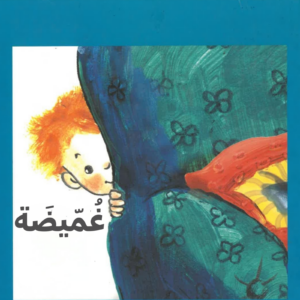
 Hide-and-Seek
 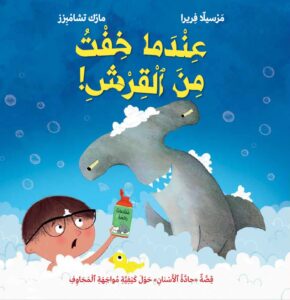 When I Was Afraid of the Shark!
 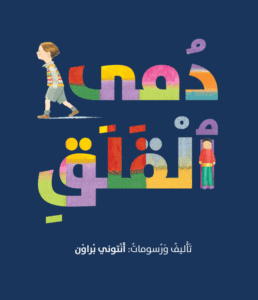 Worry Dolls
 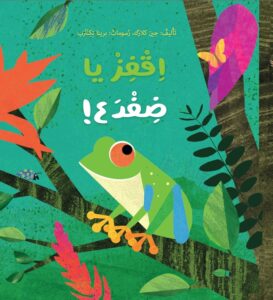 Jump, Little Frog!
 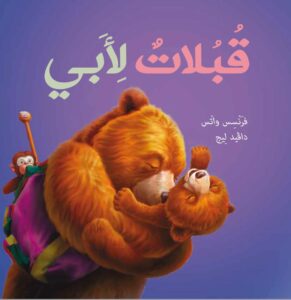 Kisses for Daddy
 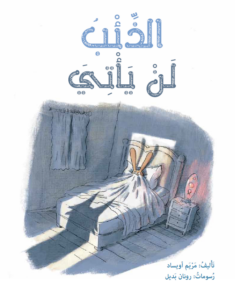 The Wolf Will Not Come
 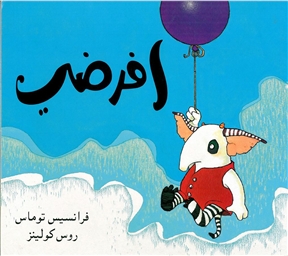 Supposing
 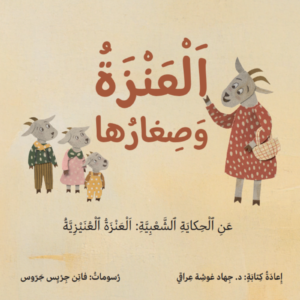 The Goat and Its Little Ones


Save
About the book
“Daddy, let’s play hide-and-seek!”
In the book Hide-and-Seek, the child Yamen hides, and the father begins searching for him while wondering out loud: “Where is Yamen hiding? Did he fall into the toy basket? Did he hide behind the couch?” The father’s attempts to find Yamen continue until he finally finds him, hugs him, and holds him with love and warmth.
As the story ends, the hide-and-seek game begins at home, within the family’s embrace—where laughter rises and warm emotional moments are created, moments that stay in the child’s memory and give them a deep sense of safety.
A child who plays is a child who learns and grows with reassurance and warmth. Play in early childhood is a natural language of communication and a means for understanding the self and the world around the child. Playing together with a child strengthens their sense of self-worth, gives them security and belonging, and reinforces the family’s emotional bond.
Save
Talk about our feelings and theirs during play
Let’s Talk
About our feelings and theirs during play:
• How did you feel when you were hiding?
• Was it fun?
• Who hides first?
• Who will join us in the hide-and-seek game?
Save
We use new words during pla
Enriching Our Language
We use new words during play, such as:
hide – I wonder – toys – in front of – behind – inside – outside
Save
We prepare a box filled with sand or wood shavings and start hiding different objects inside it
Let’s Create
We prepare a box filled with sand or wood shavings and start hiding different objects inside it:
big and small items, light and heavy ones. Then we let the child discover them and enjoy searching for them.
Save
We try the “Hot–Cold” game
Let’s Play Together
We try the “Hot–Cold” game:
We hide a toy or a certain object, and the child begins searching for it.
When they get closer, we say loudly: “Hot!”
When they move away, we say: “Cold!”
Hot??
Save
About the book
Dear Parents,
Has your child ever experienced a fear that seemed exaggerated to you?
Louay spotted a small shark at the beach, and from that moment on, his fears began to grow. His imagination took over, and he started to picture sharks everywhere: in the garden, at home, even in the bathroom! But with the help of his wise grandfather, Louay learns to understand and accept his feelings, freeing himself from fear and stepping confidently into new adventures.
This story gives us an opportunity to talk with our children about their different fears—whether it’s fear of the dark, monsters under the bed, or even sharks… Who among us doesn’t feel afraid sometimes?
It’s important to remember that most of these fears are not realistic and are often magnified by a child’s imagination. When emotions mix with imagination, a small worry can grow into a big fear.
The grandfather teaches us that fear is a natural feeling that everyone experiences. But when we express our fears and accept them, they lose much of their intensity. So let’s give our children the space to express themselves, listen attentively, and support them in understanding and embracing their feelings—so they can take their first steps toward new adventures!
Save
Follow the text with your child and explore what is real and what is imaginary in the events
Let’s Talk
About Louay’s experience
What was Louay afraid of in the story?
Would the shark really have eaten him?
Follow the text with your child and explore what is real and what is imaginary in the events—
For example: Could a shark actually bite him on the swing?
About similar experiences
What scares you?
Have you ever imagined something that wasn’t real? What was it?
Share with your child some fears you had when you were young and how you overcame them. Who helped you?
About coping with fear
How did the grandfather help Louay overcome his fear?
What happened to Louay once he understood and accepted his fear?
What can we do when we feel afraid?
Save
Learn new terms from the story such as: raises his doubts, unlikely, I cope with it.
Let’s Enrich Our Language
Learn new terms from the story such as: raises his doubts, unlikely, I cope with it.
Explain them and practice using them in sentences.
The shark appears with Louay on every page—search for it together and invite your child to describe its location using expressive language.
Save
Encourage your child to draw the thing they fear, and then transform the drawing into something funny.
Let’s Create
Encourage your child to draw the thing they fear—such as a thief or a monster—and then transform the drawing into something funny. Adding humor can greatly reduce fear and help the child approach their worries more rationally.
Save
Explore different types, sizes, and shapes of sharks.
Let’s Discover
Explore different types, sizes, and shapes of sharks. Gather information together and learn interesting facts about them.
Save
About the book
Dear Parents,
Does your child worry excessively?
Basel worries about almost everything—hats, clouds, even shoes. He feels confused and thinks he might be silly. But when his grandmother gives him a set of tiny “worry dolls” and reveals their secret, Basel manages to overcome his anxiety… and even tries to help the worry dolls themselves.
During childhood, a child’s thoughts, imagination, and questions grow rapidly, while their ability to understand and regulate their emotions is still developing. This is why children sometimes worry about things that seem simple or ordinary to us. It is important to explain to our child that worry is a natural feeling—we all experience it in different situations, and it sometimes helps us stay alert and cautious, which is a good thing.
But at other times, unrealistic fears appear and cause stress without a real reason.
We should avoid dismissing their feelings by saying, “There’s nothing to be afraid of!” Instead, we can say, “I’m here with you, and I understand how you feel,” to give them reassurance and a sense of safety. As in the story, with the help of the worry dolls, the grandmother teaches Basel an effective way to manage his emotions and express them. Let us listen to our child’s worries and encourage emotional expression—whether through talking, drawing, or even using a small doll that “listens” to them at night.
Save
Ask your child: What are some things that worry you sometimes?
Let’s Talk
About the story
What was Basel worried about? Why do you think he felt this way? What did you think about his parents’ words—did they help him appropriately? Who helped Basel manage his anxiety, and how?
About expressing emotions
Ask your child: What are some things that worry you sometimes? What do you usually do when you feel worried?
About helping others
Ask your child: What did you think of the ending? Why did Basel make so many worry dolls? Have you ever helped someone before? If you were in Basel’s place, what would you do?
Save
Encourage your child to express their feelings
Let’s Enrich Our Language
Encourage your child to express their feelings by asking:
If you had one of the worry dolls with you right now, what would you tell it? And what do you think it would say to you?
Save
The story presents a traditional and popular practice from Latin America, used to help children release their worries.
Let’s Connect
The story presents a traditional and popular practice from Latin America, used to help children release their worries. We invite you to learn more about this tradition. You can also ask older family members about the methods they used in the past to ease anxiety or fear before bedtime.
Save
Create your own worry dolls together.
Let’s Create – Making Our Own Worry Dolls
Create your own worry dolls together. Encourage your child to share one worry with the doll and place it under their pillow before bed—just like Basel did in the story.
Save
Let’s talk...
About situations and feelings: we can ask our child: Why was the frog running away?How was he feeling? What was he thinking? What helped him? What did he need to stop running?
About experiences and new places: we can ask our child: Have you ever been somewhere new? How did you feel? How did you act? What helps you overcome anxiety and face challenges?
Save
Let's explore and enjoy...
The illustrator used collage technique in the story’s illustrations. Let’s examine the drawing sand try to spot other creatures hiding in the picture. Let’s search for them and name them.
Save
Let's research and explore...
Two types of frogs were mentioned in the story: marsh frogs and tree frogs. What’s the difference between them? What are the characteristics of each?
Let’s explore the different stages of frog development.
We can also visit the forest, valley, or nearby public park to observe different living creatures and try to imitate their sounds.
Save
Let's play together...
Let’s practice our frog jumps, imagining our house floor is the marsh, then build a path using pillows and rugs as stations, moving between them as frogs do in the marsh.
Save
Every time Dad...
Every time Dad kisses his son, we see an indication of the animal whose kiss he imitates. The illustration may be of a picture on the wall or the animal may show in Dad’s clothes. We can follow these symbols of the various animals and encourage our child to find them in the book’s illustrations.
Save
Undoubtedly the child...
Undoubtedly the child will laugh a lot if we kiss him as the father does in the book while reading it.
Save
How does the kitten...
How does the kitten give a kiss to his parents? What do you think of the bee’s kiss? The child might enjoy experiencing different types of animals’ kisses.
Save
The mouse’s kiss...
The mouse’s kiss has a mustache and the monkey’s kiss is jumpy and curved! The text is full of positive descriptions for kisses that can enrich the child’s fantasy, his language and his senses. It would be fun to think together of new types of kisses for different animals.
Save
Baby Bear...
Baby Bear refuses to go to sleep and separate from his toys, as do many children, who may have an easier time going through this process with us. It is important to talk to children about the importance of getting enough sleep.
Save
We can discuss...
We can discuss our child’s ritual for going to bed. What does he/she like – and what not? We can share with our child what helps us to fall asleep such as having a hot drink, or reading a book…
Save
We may want...
We may want to make the kissing box for the family. Each person can kiss the box using a dark lipstick color, and let the child use the for his/her valuable things.
Save
We look for...
We look for little rabbit’s displays of anxiety or fear in the illustrations. What do we do when we are afraid? We talk with our children about the things that may worry them and think together about ways of relief.
Save
The wolf overcame...
The wolf overcame many obstacles to reach the house of his friend, the rabbit. We try to remember a similar experience with our children, in which they had to overcome hardships to reach a goal.
Save
Despite the rabbits...
Despite the rabbits’ fear of the wolf, little rabbit and the wolf are friends. Do we know friends who are different?
Save
The wolf is...
The wolf is an unexpected guest at the rabbit’s birthday party. Who may be an unexpected guest at our birthday party?
Save
This book is...
This book is distinguished by the relation between the text and the illustrations that reflect what the child imagines in contrary to what the mother says. We can imagine additional obstacles that the wolf may encounter and overcome.
Save
We can talk...
We can talk to our child about the book’s title: What does it mean? We can think together about other verbs that have the same meaning, such as “imagine” or “presume,” to emphasize to the child that these events are only imaginary in the mind of the little monster.
Save
After reading the story...
After reading the story, we may wish to spend a day with the family at home or outside! Children enjoy choosing the places and activities they love, and this gives them a sense of agency and responsibility. Encourage them to get involved in the planning and preparation. Here we go!
Save
The beautiful illustrations...
The beautiful illustrations of the book won several international awards. The illustrator was able to depict the monster beautifully (which is supposed to be frightening), and he succeeded in conveying, with small details, the atmosphere of a warm relationship between the mother and her child. We can look at the illustrations together and talk about what we like about them.
Save
We can go...
We can go review the instructions that mother goat gave to her children (stay at home, lock the door, don’t open for strangers). We can think together of more instructions that mother goat could give to her children in order to be safe.
Save
The mother goat...
The mother goat gave her children few signs to distinguish her. What other signs could she have given her children?
Save
Is every stranger...
Is every stranger who knocks on our door bad like the wolf? We can have a conversation with our children concerning ways of dealing with strangers who knock on our door.
Save
We can talk...
We can talk about the child’s experience of being alone at home (maybe with his older brother, or an adult). What does he feel? What makes him feel safe?
Save
The kid screamed...
The kid screamed so the neighbors came running to save the others from the wolf. We can have a conversation about different situations where a child may feel in danger. What does he/she do to save himself/herself?
Save
We can think...
We can think about our neighbors: Which neighbors can we turn to for help when we need it? How can we get help from him/her?
Save
This story was...
This story was inspired by a traditional story. We can ask grandparents to tell the children more traditional versions of the story.
Save
We invite you...
We invite you to act out the story with your children: one, two, three: action!